Pages

Saturday, October 27, 2012

Big Achievement for Red Tape Movement

Dear Green Soldiers,

Big Achievement for Red Tape Movement.


Appreciation by an International Organization IUCN, on 26th October, 2012

Red Tape Movement is thankful to IUCN for appreciation and support to Red Tape Movement. View tweet by IUCN at twitter site of IUCN

I am also thankful to NGO "Swami Vivekanand Sewa Sansthan, Etawah", Mr. Sanjay Saxena, Dr. Rajeev Chauhan, Mr. Ravindra Dixit and all the supporters of this movement for their co-operation to reach this level.

I thank you. 


Prabhat Misra

Monday, October 15, 2012

The Power of We: Red Tape Movement


My name is Prabhat Misra; I am in government job as an officer in the district Etawah [U.P., India]. I am also running a peaceful and non-violent movement to save trees and bio-diversity, named "RED TAPE MOVEMENT", in Etawah. This movement was started by me on 5th June, 2008. Under this movement, especially on a holiday, we choose a village and go to this village and do plantation and then tie red tapes on existing trees trunks, with the help of villagers and there, we give them message that to cut the trees is lethal for our future and generations to come. I started this movement with the help of a local N.G.O. named “Swami Vivekanand Sewa Sansthan”, Etawah. Initially, we faced the problem of co-operation at grass root level. Later, with continuous awareness campaign, regarding the importance of trees and bio-diversity and dangers of Climate Change, at grass root level, especially with villagers, positively changed the co-operation. Till now, we have tied Red Tapes on about 10,000 trees trunks with the help of villagers. Red Tape Movement has now taken a big shape, from few peoples to many peoples co-operation, in the form of “Peoples Participation Movement”. Red Tape Movement has also been the part of several actions such as Earth Day, Earth Hour, 350.org’s Connect the Dots and many more days of action. Such people’s participation movements are the need of the hour to save our biodiversity and nature. 
My experience about this movement is very positive and energetic. We are living in a world which is under “transition and transformation phase” of energy and facing the problem of Climate Change. So, we must develop a better and natural “GHG Sink system” to achieve 350 ppm CO2 level in the atmosphere. Trees are “Best Natural Sinks” of CO2 and will be helpful to tackle with Climate Change. World Community should keep one fundamental rule, while making any planning, that, “United We” can save earth from Climate Change, through such peoples participatory grass root level awareness movements. This is MUST to save our beautiful Earth from Climate Change for our future generations to come. Red Tape movement is now spreading fast at grass root level and peoples are supporting our move to protect and save trees and bio-diversity.  


Saturday, September 24, 2011

Moving Planet - September 24th, 2011: A Day to Move Beyond Fossil Fuels

MOVE to SAVE; Join Red Tape Movement at http://www.moving-planet.org/events/in/etawah/428 on 24th Sept. 2011.


Monday, April 4, 2011

Appreciation from British Embassies

British Embassies of Guatemala City and Ukraine appreciated our work on Earth Hour on 24th March 2011. We are thankful to British Embassies of Guatemala City and Ukraine and their respective respected Ambassadors for the appreciation and also thankful to our savings agents and peoples of Ekdil town area. My special thanks to respected Mr. Vijyendra Pandian, I.A.S., Dr. Rajeev Chauhan, Environmentalist and Mr. Sanjay Saxena, Press Reporter for active participation.

Sunday, March 13, 2011

Earth Hour News: A message from our Global Ambassador Miranda Kerr

Earth Hour News: A message from our Global Ambassador Miranda Kerr: "I am pleased to have been asked to be the global ambassador for Earth Hour 2011. Each of us has a responsibility for the sustainability of..."

Wednesday, March 2, 2011

पेड़ बचाने को बांधे लाल फीता

Mar 02, 01:01 am

इटावा, कार्यालय प्रतिनिधि : स्वामी विवेकानंद सेवा संस्थान द्वारा ग्राम चितभवन में वृक्षों में लाल फीते बांधकर वृक्ष बचाने का आह्वान किया गया। खास बात यह रही कि अभियान में बड़ी संख्या में ग्रामीणों ने वृक्षों में लाल फीते बांधकर वृक्ष बचाने का संकल्प लिया। यह लाल फीता अभियान सहायक निदेशक बचत प्रभात मिश्रा की प्रेरणा से चलाया जा रहा है
इस मौके पर संस्थान के अध्यक्ष संजय सक्सेना ने कहा कि धरती पर प्राणियों का जीवन बचाना है तो वृक्षों को बचाना होगा। वृक्ष न केवल पर्यावरण को प्रदूषण मुक्त रखते हैं बल्कि प्राणियों का जीवन बचाने में भी महत्वपूर्ण भूमिका का निर्वहन करते हैं।
उपाध्यक्ष ओमरतन कश्यप, सचिव विवेकरंजन गुप्ता ने कहा कि आदिकाल से वृक्षों का महत्व बताया जा रहा है, लेकिन वृक्षों को काटा जाता रहा। नतीजतन पर्यावरण और प्राणियों के जीवन पर संकट के बादल छाने लगे हैं। अब वृक्ष लगाना व बचाना बेहद जरूरी हो गया है। उन्होंने कहा कि वृक्षों में बंधा लालफीता यह संदेश देता है कि इन्हें काटना खतरनाक होगा।
लालफीता अभियान के दौरान ग्रामीण प्रेमकांत दुबे, विश्वनाथ, सुभान अली, कल्लू खान, उदयवीर, रामचरन शाक्य, रामशंकर, रामदीन शंखवार, सुशील शुक्ला, रमेश बाथम, सुखराम जितेंद्र, करन सिंह व सीताराम आदि ने वृक्षों में लाल फीते बांधे और वृक्ष बचाने का संकल्प लिया।

Monday, February 14, 2011

Energy: Why Biofuels Help Push Up Food Prices


Energy: Why Biofuels Help Push Up Food Prices. Read my comments on this article.

Genetically Modified Mosquitoes Released in Malaysian Forest


Genetically Modified Mosquitoes Released in Malaysian Forest;Read my comments on this article.

Bangladesh Climate Migration Happening — Now


Bangladesh Climate Migration Happening — Now; Read my comments on this article.

A New Project to Track Animal Diseases Before They Infect Humans


A New Project to Track Animal Diseases Before They Infect Humans; Read my comments on this article.

The Top 10 Most Endangered Forests


The Top 10 Most Endangered Forests; Read my comments on this article.

Forests Vs. Food?


Forests Vs. Food? Read my comments on this article.

Politics: It's Not Just Republicans Who Anger Greens. Obama Can Do It Too


Politics: Not Just Republicans Who Anger Greens. Obama Can Do It Too; Read my comments on this article.

Climate: A New Study Finds That Global Warming Could Dry Out the Southwest


Climate: A New Study Finds That Global Warming Could Dry Out the Southwest; Read my Comment on Time.com article.

Friday, February 4, 2011

IUCN - News


The 9th UN Forum on Forests (UNFF9) is drawing to a close. With just over 24 hours left, negotiators are entering lockdown to get a meaningful declaration in place for Friday's finish.
Stewart Maginnis is IUCN's head of delegation and IUCN's Director for Environment and Development. He explains just where the negotiations are at present.

http://support.edf.org/site/MessageViewer?em_id=10570.0

Dear Prabhat,

I'm Lisa Moore, an EDF scientist.


We're in a race against time to mitigate the worst of global warming's impacts by dramatically cutting our emissions.

With your support, we can keep the pressure on the United States to act now to reduce global warming-causing pollution.

I've spent most of my professional career reviewing volumes of scientific studies on the climate crisis and its impact on our natural world. And I can tell you that global warming is without a doubt the biggest environmental threat facing our planet today.

It's not too late to change our course, but we will need to act fast. I hope you'll consider supporting EDF's efforts to reduce the pollution that causes global warming.

Over the past few decades, a warming climate has already led to some very dramatic planetary impacts, including the massive loss of polar and glacial ice around the world.

We could soon reach other critical tipping points including the total disappearance of summer sea ice in the Arctic Ocean, widespread extinctions of the earth's plants and animals, and dramatic changes in entire ecosystems.

The consequences are dire. But there is hope. Right now, we have a historic opportunity to change our course.

Will you make a gift to support EDF's urgent climate work today? Your generous support will help us keep the pressure on the U.S. to act swiftly and reduce global warming-causing pollution.

EDF's goals here are threefold:

Reduce the pollution that causes global warming
Help businesses make low-carbon innovations
Secure an international climate agreement in order to avoid catastrophic climate change.
We're working simultaneously on a number of fronts to achieve these goals.

First and foremost, we're keeping the pressure on U.S. leadership to act quickly and pass comprehensive climate legislation that will curb our global warming pollution and unleash a clean energy economy.

We've also helped launch an unprecedented coalition of business partnerships -- including top US corporations like DuPont and General Electric -- that has jointly called for a reduction in global warming-causing pollution.

EDF's international partnerships extend to countries like China where we are developing pathways to clean growth, and India where we are working with local groups on innovative ideas for clean, sustainable development.

EDF will continue to be a leader in the fight against global warming. I hope you'll consider supporting our urgent climate work at this critical moment.

Sincerely,

Lisa Moore
EDF Scientist

Clip 16 - Marie Michoux (2nd year, IPAC design school, Geneva)

Clip 22 - Melody Pepin (3rd year, IPAC design school, Geneva)

Wednesday, February 2, 2011

World carbon dioxide emissions data


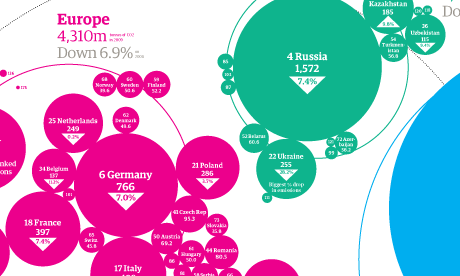
World carbon dioxide emissions are one way of measuring a country's economic growth too.

And the latest figures - published by the respected Energy Information Administration - show CO2 emissions from energy consumption - the vast majority of Carbon Dioxide produced............ Read the complete story HERE.
[Source: guardian]

Tuesday, February 1, 2011

WORLD WETLANDS DAY- 2nd Feb 2011


2 February each year is World Wetlands Day. It marks the date of the adoption of the Convention on Wetlands on 2 February 1971, in the Iranian city of Ramsar on the shores of the Caspian Sea. Each year since 1997, government agencies, non-governmental organizations, and groups of citizens at all levels of the community have taken advantage of the opportunity to undertake actions aimed at raising public awareness of wetland values and benefits in general and the Ramsar Convention in particular.
Wetlands are among the most productive ecosystems in the world, comparable to rain forests and coral reefs; they are found on every continent except Antarctica and from the tundra to the tropics. Due to typical functions like- wildlife habitat and food chain support, groundwater recharge, water purification, nutrient retention and flood control- wetlands are considered as "biological supermarkets", "nurseries of life" and "the kidneys of the landscape" (Barbier et al. 1997; Mitsch and Gosselink 1993). These are facing threats for existence; major threats are- anthropogenic activities, agriculture activities, deforestation, pesticides pollution, pollution, introduced species threats due to Eichhornia etc. Migrating birds use wetlands to rest and feed during their cross-continental journeys and as nesting sites when they are at home. As a result, wetland loss has a serious impact on these species.
The theme for World Wetlands Day 2011 is Wetlands and Forests and slogan is– Forests for water and wetlands. 2011 is a special year for Ramsar as we are celebrating our 40th anniversary. Best Wishes. Read the Message of Mr Anada Tiéga, Secretary General, Ramsar Convention, by clicking here and for Ramsar Sites in Google Earth click here.
[Source: Ramsar and Red Tape Movement]

Friday, January 21, 2011

Long-distance migration may help reduce infectious disease risks for many animal species

It's a common assumption that animal migration, like human travel across the globe, can transport pathogens long distances, in some cases increasing disease risks to humans. West Nile Virus, for example, spread rapidly along the East coast of the U.S., most likely due to the movements of migratory birds. But in a paper just published in the journal Science, researchers in the University of Georgia Odum School of Ecology report that in some cases, animal migrations could actually help reduce the spread and prevalence of disease and may even promote the evolution of less-virulent disease strains. Read detailed report here.
[Source: eurekalert]

Expanding Sustainable Timber in Tanzania


There are many negative environmental impacts of globalization — increased pollution, depleted natural resources and an overtaxed food system, to name a few.
The East African blackwood tree (Dalbergia melanoxylon) — known as mpingo in Swahili — may sound exotic to people outside Africa, but chances are you’ve seen it. Its wood is prized for use in musical instruments like clarinets and bagpipes, as well as the traditional sculptures seen in African villages and on Western city streets. However, unregulated logging has seriously depleted much of the tree’s native habitat, posing a threat to the local economy as well as the species that dwell in these forests.

[Source: Conservation International Blog]

The Plant List: a working list of all known plant species


The Plant List is a working list of all known plant species. Version 1, released in December 2010, aims to be comprehensive for species of Vascular plant (flowering plants, conifers, ferns and their allies) and of Bryophytes (mosses and liverworts). It does not include algae or fungi. Version 1 contains 1,244,871 million scientific plant names of which 298,900 are accepted species names. It includes no vernacular or common plant names.
[Source: The Plant List]

Wednesday, November 10, 2010

Monday, November 1, 2010

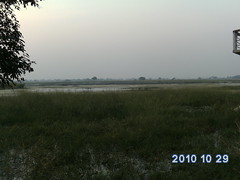
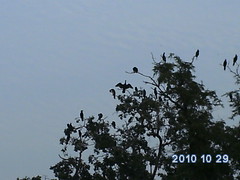
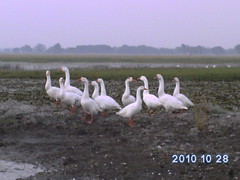
Wetlands and Sarsai Nawar Wetland

Wetland- Sarsai Nawar Migratory birds, Sarsai Nawar Wetland Ducks in Sarsainawar Growers of Water Caltrop [Trapa natans], Singhara, in wetland area, Sarsai Nawar Flying Crane neer Sarsai Nawar Crane bird at Takha neer Sarsai Nawar range
The Ramsar Convention (Article 1.1) defined wetlands as: “areas of marsh, fen, peat land, or water, whether natural or artificial, permanent or temporary, with water that is static or flowing, fresh, brackish or salt, including areas of marine water the depth of which at low tide doesn’t exceed six meters”. In addition, the convention (Article 2.1) provides that wetlands: “may incorporate riparian and coastal zones adjacent to the wetlands, and islands or bodies of marine water deeper than six meters at low tide lying within the wetlands. Wetlands are among the most productive ecosystems in the world, comparable to rain forests and coral reefs. In wetland ecosystem water is the primary factor controlling both the plant and animal life; they are found on every continent except Antarctica and from the tundra to the tropics . Wetlands fall into four general categories—marshes, swamps, bogs, and fens. Marshes are wetlands dominated by soft-stemmed vegetation, while swamps have mostly woody plants. Bogs are freshwater wetlands, often formed in old glacial lakes, characterized by spongy peat deposits, evergreen trees and shrubs, and a floor covered by a thick carpet of sphagnum moss. Fens are fresh water peat-forming wetlands covered mostly by grasses, sedges, reeds, and wild flowers. Wetlands favours particular type of trees, shrubby species and associated herbs and grasses with algae. Typical characteristic species of wetland ecosystem include hydrophytes such as Cyperus, Azolla, Nymphaea, Typha, Potamogoton, Wolffia, Phragmites, Eichhornia etc., and tree species include species of Ficus, Tamarindus indica, Mimusops, Syzygium, Terminalia, Acacia, Mangifera. An immense variety of species of insects, amphibians, reptiles, birds, fish, and mammals forms fauna of wetlands. Some birds, for example, Plover, Goose, Crane, Flamingo like feed and breeds in wetlands. Detritus Food Chain is the important part of wetland ecosystems. Due to typical functions like- wildlife habitat and food chain support, groundwater recharge, water purification, nutrient retention and flood control- wetlands are considered as "biological supermarkets", "nurseries of life" and "the kidneys of the landscape" (Barbier et al. 1997; Mitsch and Gosselink 1993). India is very rich in wetland habitats; Wetlands in India (excluding rivers), account for 18.4% of the country’s geographic area, of which 70% is under paddy cultivation; there are 21 "Ramsar sites in India".
Under the National Wetlands Conservation Programme (NWCP) programme, 115 wetlands (Annexure I) have been identified till now by the Ministry of Environment(India) and SARSAI NAWAR (area 161.27 ha.) is part of this and is listed at serial number 101. Sarsai Nawar is a vast and beautiful wetland (it is an open form of fen) situated in Takha block of District Etawah. In India, wetlands are disappearing at a rate of 2% to 3% every year and Sarsai Nawar wetland is also facing threats for existence; major threats are- anthropogenic activities, agriculture activities, deforestation, pesticides pollution, rural sewage pollution, introduced species threats due to Eichhornia etc. Trapa and Eichhornia have adverse impact on aquatic ecosystems. Conservation of this wetland is must for the survival of Sarus Cranes (Grus antigone) and many migratory birds as this wetland is the important part of their life and is must for their survival. Migrating birds use wetlands to rest and feed during their cross-continental journeys and as nesting sites when they are at home. As a result, wetland loss has a serious impact on these species.
Also listen about wetlands by just click here.

Saturday, October 23, 2010

Plants play larger role than thought in cleaning up air pollution


Plants play larger role than thought in cleaning up air pollution . The uptake of oVOC's was especially rapid in dense forests and most evident near the tops of forest canopies, which accounted for as much as 97 percent of the oVOC uptake that was observed. [Source: Eurek Alert, National Science Foundation and Refdoc.fr]

Friday, October 15, 2010

Water Footprint


[Fig: Average national water footprint per capita (m3/cap/yr). Green means that the nations's water footprint is equal to or smaller than the global average. Countries with red have a water footprint beyond the global average. Period: 1997-2001]
The water footprint is an indicator of water use and is defined as the total volume of freshwater that is used to produce the goods and services consumed by the individual or community or produced by the business. Human impacts on freshwater systems can ultimately be linked to human consumption. Professor Arjen Y. Hoekstra is the creator of the water footprint concept. he mission of the Water Footprint Network is to promote the transition towards sustainable, fair and efficient use of fresh water resources worldwide. Many countries have significantly externalised their water footprint, importing water-intensive goods from elsewhere. This puts pressure on the water resources in the exporting regions, where too often mechanisms for wise water governance and conservation are lacking. Not only governments acknowledge their role in achieving a better management of water resources, also businesses and public-service organisations increasingly recognize their role in the interplay of actors involved in water use and management. Based on the top-down approach, the global average water footprint is found to be 1240 m3/yr/cap. There are large differences between countries. In the USA the average water footprint is 2500 m3/cap/yr. In China the average water footprint is 700 m3/cap/yr.


So, Save Water, Save Future. Support Blog Action Day 2010 on Water. [Source of image, graph and video: Water Footprint]